In this story:
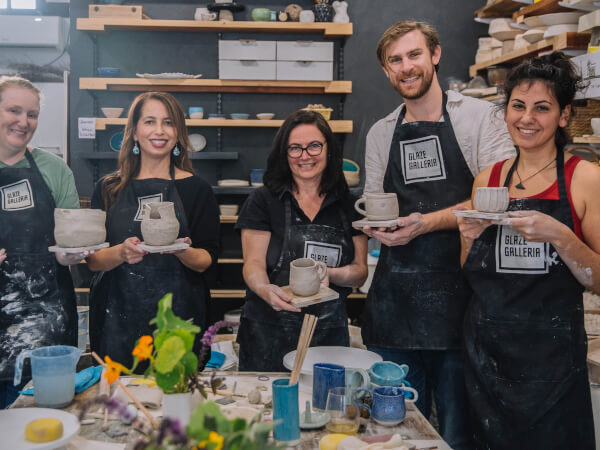
If you’ve ever wanted to play with clay, there’s no better time to start. Pottery classes in Los Angeles are relaxing, creative, and just plain fun. The best part? You end up with something beautiful (or at least charmingly lopsided) to show for it. Across Los Angeles, pottery studios make it easy for beginners to dive in, experiment, and learn the basics.
Ready to sink your hands into clay? Let’s explore three of the funnest types of pottery and what makes each one so satisfying to try as a beginner.
Types of pottery you can try in Los Angeles
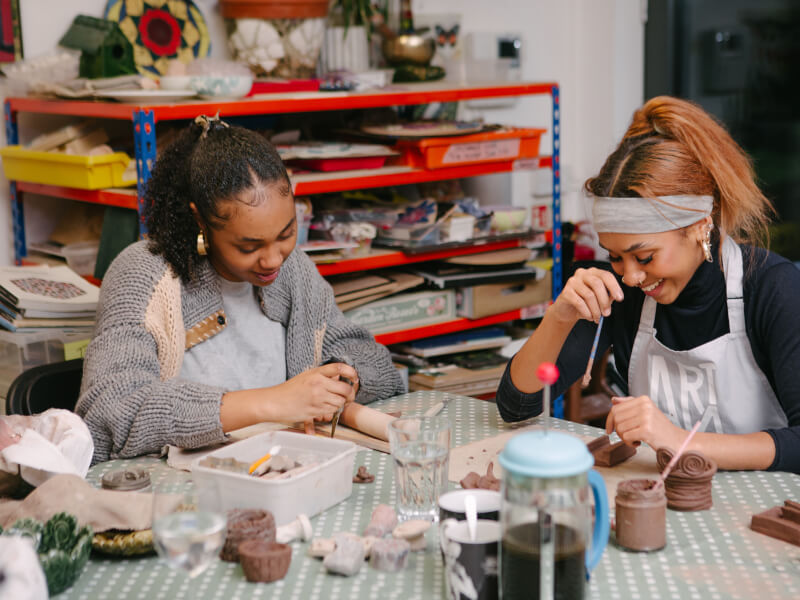
Before you get started, it helps to know the basics. Most pottery workshops use one of three main clay types: stoneware, earthenware, or porcelain.
- Earthenware has that classic rustic charm, firing at lower temperatures and taking color beautifully.
- Stoneware is strong, smooth, and ideal for everyday items like mugs and bowls.
- Porcelain is refined and delicate, known for its white finish and elegant translucence.
Each clay feels a little different in your hands and offers its own creative possibilities. Whether you’re throwing on the wheel, hand building a vase, or glazing your first ceramic dish, experimenting with all three is the best way to discover which type of pottery suits your style.
1. Earthenware
Why beginners love it: Earthenware encourages creativity. You can experiment with texture, glaze colors, and organic forms. It’s great for sculpt-and-sip style workshops where the goal is to relax, play, and craft something uniquely your own.
What it is: Earthenware is one of the oldest and most widely used types of pottery, fired at lower temperatures (around 1000–1100°C). It includes clays like terracotta, known for its warm, reddish-brown tones. Unlike stoneware, earthenware remains slightly porous after firing and usually needs a glaze to make it watertight, and that’s what gives it those beautiful glossy finishes.
What it feels like to work with: This clay is softer and more pliable, making it easier to mold and shape, a perfect choice for beginners who enjoy tactile, hands-on crafting. It’s more porous, so earthenware also retains vibrant glazes, giving you bold color options and artistic freedom.
Tools and techniques:
- Hand-building: perfect for making planters, vases, and textured art pieces using your hands, slabs, or coils.
- Sculpting tools: like wooden shapers or metal loops for adding detail.
- Glazing and decorating: experiment with brush-on glazes or slip painting to create rich, decorative finishes.
Whether you're after a one-off clay session or looking to start a pottery hobby in LA, earthenware is a great material to help you get started!
2. Stoneware
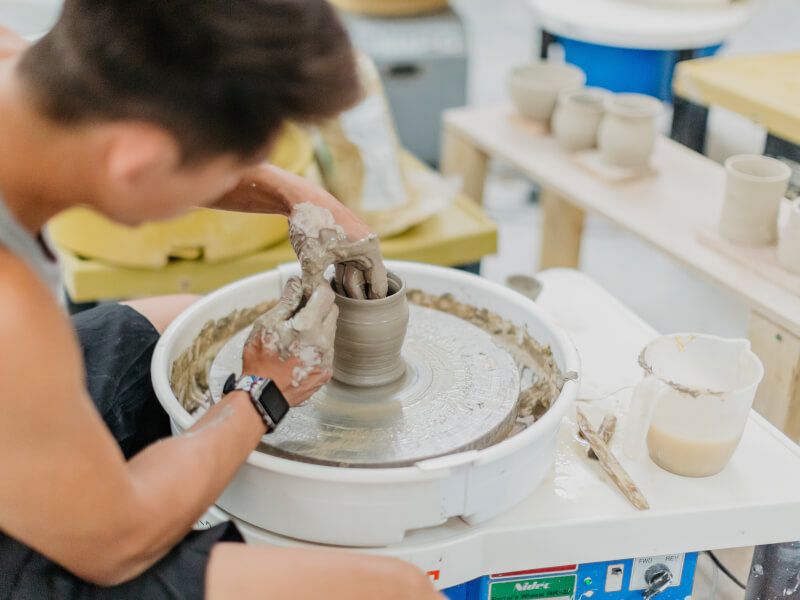
Why beginners love it: Stoneware’s durability makes it easy to handle and forgiving if you make small mistakes. You’ll walk away with sturdy, usable creations that can go straight into your kitchen or home.
What it is: Stoneware is one of the most popular clays for both beginners and experienced potters. It’s a dense, durable clay that becomes non-porous after high-temperature firing (around 1200–1300°C). The result? A strong, chip-resistant finish, perfect for ceramic mugs, bowls, plates, and other pieces you’ll use every day.
What it feels like to work with: Stoneware has a smooth, slightly gritty texture that feels stable and forgiving in your hands. It’s ideal for wheel throwing, where you center and shape clay on a spinning wheel to form symmetrical vessels like mugs and vases. You can also hand build stoneware pieces using techniques like coiling or slab-building for more sculptural work.
Tools and techniques:
- Pottery wheel: for even, symmetrical forms.
- Ribs and trimming tools: to smooth and refine the surface.
- Sponges and slip: to keep the clay moist and workable.
- Glazing: Stoneware takes glaze beautifully, from matte neutrals to glossy finishes, creating watertight, functional pieces.

 Runs regularly
 Chinatown
 1 to 10 guests
 $65


 5 years in business


Stoneware vs. earthenware: how to find your perfect fit
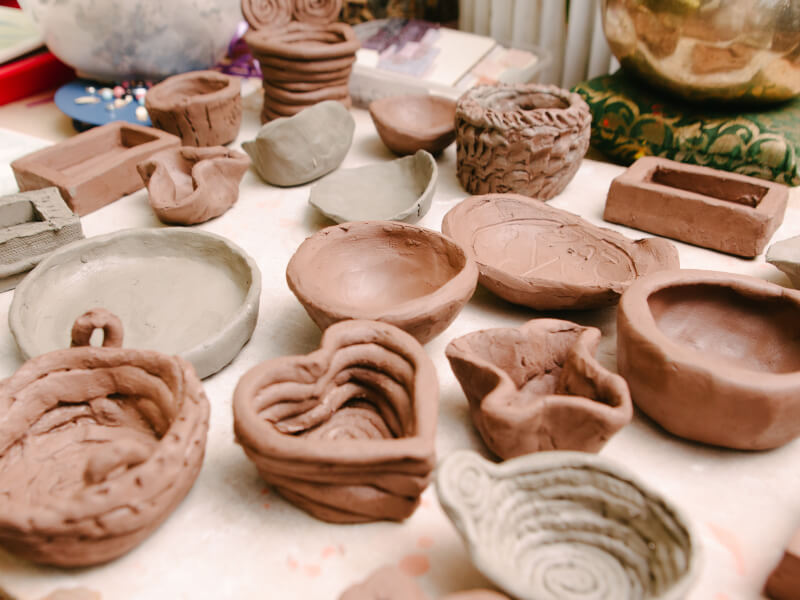
Both stoneware and earthenware are great starting points for beginner potters, but they have some small differences that can make your experience unique.
Key differences:
- Firing temperature: Stoneware fires hotter and becomes vitrified (non-porous); earthenware stays more porous and often needs a glaze.
- Durability: Stoneware is stronger and better for functional ware like dishes; earthenware is softer and ideal for decorative or artistic pieces.
- Finish: Stoneware tends to have a smooth, modern finish; earthenware offers rustic charm and earthy tones.
How to explore both pottery types at a studio near you:
In Los Angeles, many studios use a variety of earthenware and stoneware clays to create one-of-a-kind ceramics. Here are some fun, beginner-friendly types of pottery classes where you can test both:
- Beginner Wheel Throwing Class in Chinatown: Learn to center, pull, and shape clay on the wheel. Ideal for beginners wanting to experience the meditative rhythm of pottery.
- Create What You Want Pottery Class in Downtown LA: A flexible workshop where you can create any ceramic piece you want using hand building techniques.
- Sculpt and Sip Pottery Workshop in Redondo Beach: A laid-back, social evening where you can hand-build pottery while enjoying drinks with friends.
- Handbuilding Pottery Workshop in Venice and West Hollywood: Create a unique object by squishing and molding clay before decorating it with stamps, textures, and paint!
- Matcha Bowl Ceramics Class in DTLA: Interested in creating a specific pottery project? Create your own traditional-style matcha bowl while learning fundamental sculpting techniques.
- Miniature Wheel Throwing Class in San Pedro: Find the pottery wheel intimidating? Start small and spin tiny creations on a potter’s wheel to make miniature pots, succulent holders, or other adorable decorative pieces.
Each class gives you hands-on experience with clay shaping, trimming, and glazing. No matter which type of clay the studio provides, you’ll learn universal skills that apply to all pottery.
3. Porcelain
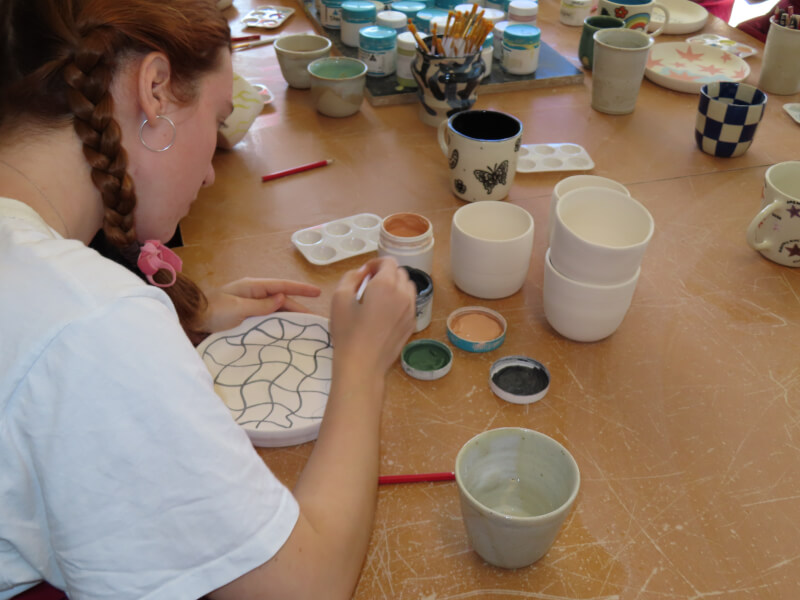
Why beginners love it: While porcelain takes a gentle touch, it’s deeply rewarding for makers who want to create refined, high-end pieces. Many classes guide you step-by-step through the process, helping you master precision without pressure.
What it is: Porcelain is the most refined and delicate of the types of pottery, fired at the highest temperatures (around 1250–1400°C). It’s made from fine kaolin clay and is known for its pure white color, smoothness, and slightly translucent quality when thin.
What it feels like to work with: Porcelain is smooth and silky, but can be trickier to handle because it’s less plastic than other clays. That makes it a fun challenge for pottery enthusiasts who want to refine their skills. When shaped carefully, porcelain produces stunning, lightweight pieces with a clean, elegant aesthetic.
Tools and techniques:
- Hand-building: ideal for small, delicate works like dishes, jewelry trays, or vases.
- Fine detail tools: needle tools, brushes, and precision cutters help you shape and carve subtle designs.
- Glazing: porcelain can be left unglazed for a matte finish or coated with transparent glaze for a glossy, glass-like surface.
Top LA class picks for porcelain:
- Porcelain Jewelry Dish Workshop in Santa Monica: Create an elegant jewelry dish using fine porcelain clay, learning techniques for shaping, refining, and glazing. Perfect for crafters who love delicate details and minimalist design.
- Sip and Sculpt Charcuterie Board Class in Santa Monica: Combine creativity and fun as you hand-build a custom porcelain serving board, ideal for entertaining or gifting.
- Ikebana Vase Making Class in Santa Monica: Inspired by Japanese floral design, this workshop lets you craft a graceful porcelain vase tailored to minimalist flower arrangements.
Find your clay match in LA
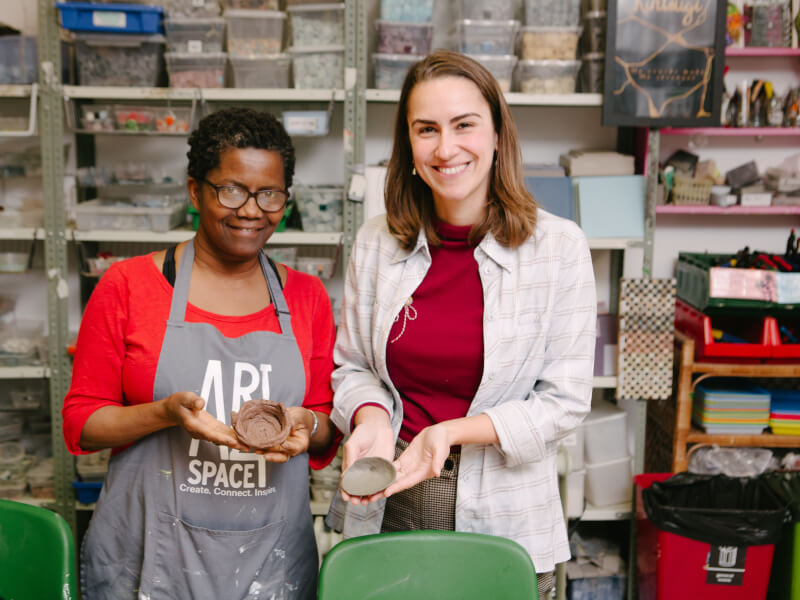
Pottery is all about getting hands-on, experimenting, and discovering what clay can do. Whether it’s the sturdy charm of stoneware, the cozy warmth of earthenware, or the delicate elegance of porcelain. These types of pottery give you a new way to play, create, and express yourself.
With so many different kinds of pottery to choose from, you can try all three fun clay types, practice essential techniques like wheel throwing, hand-building, trimming, and glazing, and walk away with something you made entirely yourself.
Ready to sink your hands in? Pick a class, roll up your sleeves, and start exploring the funnest types of pottery, one mug, bowl, or vase at a time.